
November 9, 2026
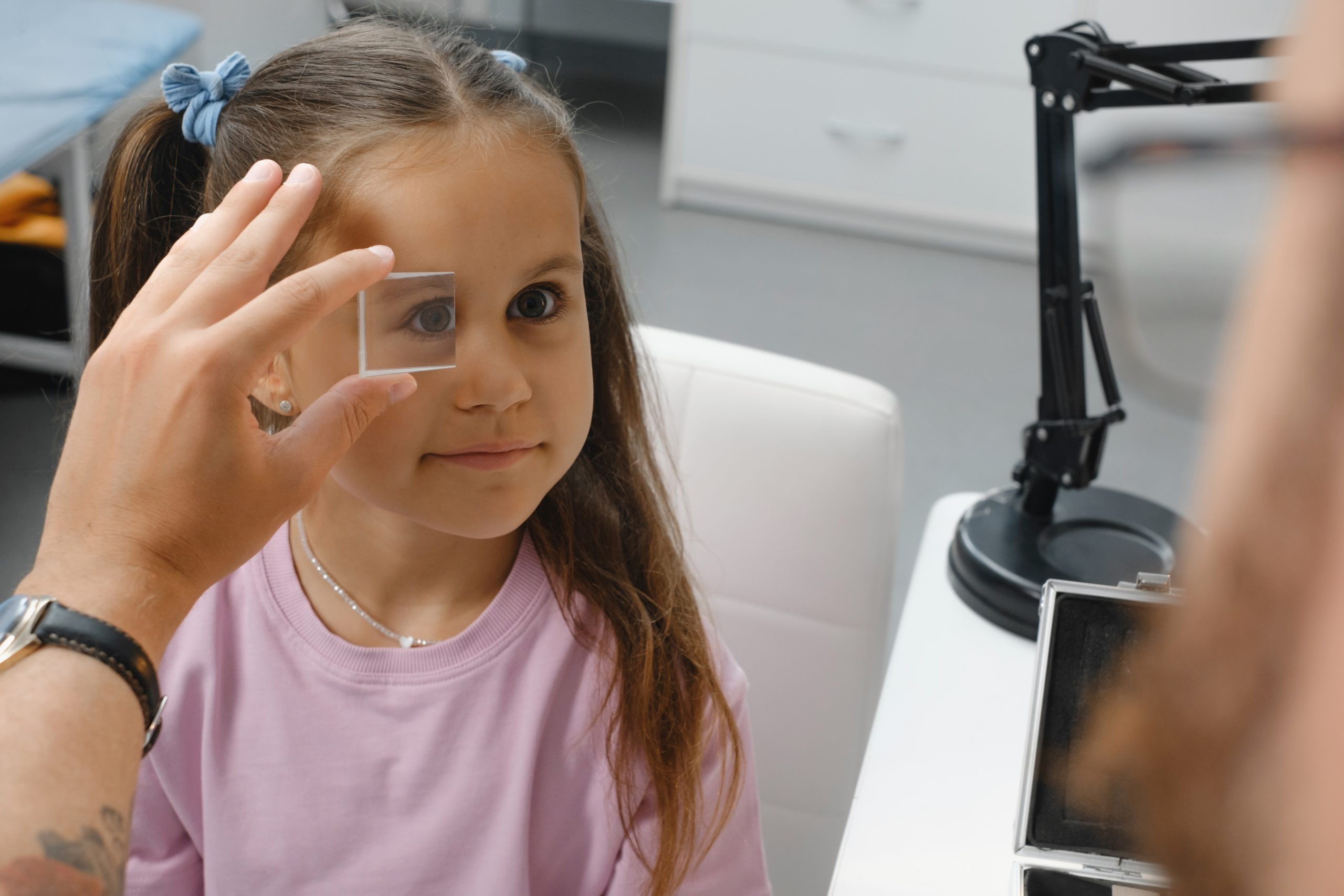
Understanding One of the Most Common Types of Childhood Strabismus
Have you noticed that one of your child’s eyes occasionally drifts outward, especially when they’re tired, daydreaming, sick, or looking into the distance?
This may be intermittent exotropia, a common form of strabismus (eye misalignment) in children. Unlike constant exotropia, intermittent exotropia means the eyes are properly aligned some of the time but occasionally drift outward. Many children can bring their eyes back into alignment without even realizing they’re doing it.
What Causes Intermittent Exotropia?
Normally, the brain coordinates both eyes so they point toward the same object and work together. Children with intermittent exotropia have difficulty maintaining that alignment consistently. Their eyes may appear perfectly straight during most activities, but one eye occasionally drifts outward. The exact cause is not always known. Family history, differences in binocular vision control, and other factors may contribute. Intermittent exotropia often becomes noticeable during early childhood, although it can develop at other ages.
Common Signs Parents Notice
Parents frequently describe:
- One eye drifting outward when their child is tired or distracted
- Eye drifting while looking at distant objects
- Squinting or closing one eye in bright sunlight
- An eye that appears to wander in photographs
- Eye drifting that becomes more noticeable during illness
- Periods when the eyes look completely normal
Some children experience double vision or visual discomfort, but many have no complaints because their brain can suppress the image from the drifting eye.
An important distinction: A child who does not complain about vision problems may still have intermittent exotropia that warrants evaluation.
Why Does My Child Close One Eye in Sunlight?
Closing or squinting one eye outdoors is a commonly reported symptom of intermittent exotropia. However, not every child who closes one eye in sunlight has strabismus. An examination is needed to determine the cause.
How Do We Determine Whether Treatment Is Necessary?
One of the most important aspects of intermittent exotropia is determining how well a child controls the eye drifting. Our pediatric ophthalmologists and certified orthoptists evaluate:
- How frequently the eye drifts outward
- How quickly the child can regain alignment
- Whether the drifting occurs at distance, near, or both
- The size of the eye misalignment
- Vision in each eye
- Depth perception and binocular vision
- Changes in alignment over time
- Whether the child experiences double vision or other symptoms
A child whose eyes remain aligned most of the time may need a very different treatment approach than a child whose drifting is frequent and difficult to control. This is why specialized measurements and follow-up examinations are so valuable.
Does Intermittent Exotropia Always Get Worse?
No. Intermittent exotropia does not follow the same course in every child. Some children maintain relatively stable eye alignment for years. Others experience increasing frequency of outward drifting or reduced control. Occasionally, control may improve. Because progression is not inevitable, surgery is not automatically recommended simply because a child has intermittent exotropia.
Regular follow-up helps determine whether the condition is changing and whether treatment should be considered.
Treatment Options for Intermittent Exotropia
Observation and Monitoring: For children with good eye alignment control, normal vision development, and few symptoms, careful monitoring may be the most appropriate approach. Follow-up examinations allow our team to track changes in eye alignment, control, and binocular vision.
Prescription Glasses: Some children benefit from glasses to correct refractive errors that may affect visual clarity or eye alignment. Glasses are not a universal treatment for intermittent exotropia, but they may be an important part of an individualized plan.
Patching: Part-time patching may be recommended in selected children, particularly when amblyopia is present or as a short-term treatment to help manage intermittent exotropia. Patching does not permanently correct the underlying eye alignment problem, and its benefits vary.
Eye Muscle Surgery: Surgery may be recommended when outward drifting becomes frequent, control worsens, binocular vision deteriorates, or the misalignment causes significant functional or other concerns. Strabismus surgery adjusts the eye muscles to improve alignment. The decision depends on multiple clinical findings rather than a single measurement or how often a parent notices the drifting.
Do Eye Exercises Help Intermittent Exotropia?
This is a common question. Targeted exercises can help certain binocular vision disorders, particularly symptomatic convergence insufficiency. However, routine vision therapy or eye exercises have not been established as an effective long-term treatment for most forms of childhood intermittent exotropia. The appropriate treatment depends on the specific diagnosis.
Why Orthoptists Are Important in Intermittent Exotropia Care
At Children’s Eye Care, our certified orthoptists play an important role in evaluating and monitoring children with intermittent exotropia. Orthoptists have specialized training in eye alignment, binocular vision, and eye movement disorders. They perform detailed measurements, assess how well a child controls the drifting, and monitor changes over time.
Depending on the physician’s treatment plan, some follow-up appointments may be scheduled directly with an orthoptist. This specialized approach helps our physicians make informed treatment recommendations while avoiding unnecessary intervention.
Specialized Intermittent Exotropia Care in Southeast Michigan
Children’s Eye Care provides specialized strabismus evaluations and treatment through our offices in Clinton Township, Dearborn, Detroit, and West Bloomfield. Our fellowship-trained pediatric ophthalmologists and certified orthoptists work together to monitor eye alignment and determine when treatment may be appropriate.
Learn more: Strabismus (Eye Misalignment) | Amblyopia (Lazy Eye) | Orthoptists
Related Posts

Screen Time and Kids’ Eye Health
May 2, 2025
Intermittent Exotropia: Why Does My Child’s Eye Drift Outward?
November 9, 2026
The History of Pediatric Ophthalmology at Children’s Hospital of Michigan
September 30, 2026
John D. Baker, MD Pediatric Ophthalmology Symposium 2027 | Baker Day Detroit
February 4, 2025
view all articles