What to Expect at Your Adult Strabismus Exam With Children’s Eye Care of Michigan
Misaligned eyes are common in children, but not so common in adults. Among eye physicians and specialists, pediatric ophthalmologists have the highest level of training in diagnosing and treating adult eye misalignment and binocular vision dysfunction. Eye misalignment, or strabismus, is a common cause of double vision in adults and, in most cases, it can be treated, offering significantly better quality of life. It’s important that you know what to expect at your adult strabismus eye exam with Children’s Eye Care of Michigan.
Whether you are an adult patient or the parent of a developmentally delayed adult child, please know that the highly skilled team of ophthalmologists and eye care professionals at Children’s Eye Care of Michigan are experienced in working with adult and nonverbal patients to efficiently and accurately diagnose and treat adult strabismus.
The benefits of treating adult strabismus, depending on the type of strabismus and the problems experienced, include reduction or elimination of double vision, increased binocular vision, expanded peripheral vision and improved emotional, social and economic benefits, as well. Successful correction of adult strabismus can provide a better quality of life.
Here’s what to expect at your adult strabismus exam:
- Your visit with Children’s Eye Care of Michigan will be different from visits with your regular eye doctor. Our strabismus specialists will assess your eye misalignment and its effect on your vision, rather than provide an eyeglasses prescription examination.
- You will work intensively one-on-one with one of our expert certified orthoptists, who will take a variety of measurements. These measurements are comprehensive and take time, so please plan for at least 90 minutes for your exam.
- If we’re investigating retinal causes of double vision, we may need to use dilation drops, but typically we won’t need to dilate your pupils for this exam.
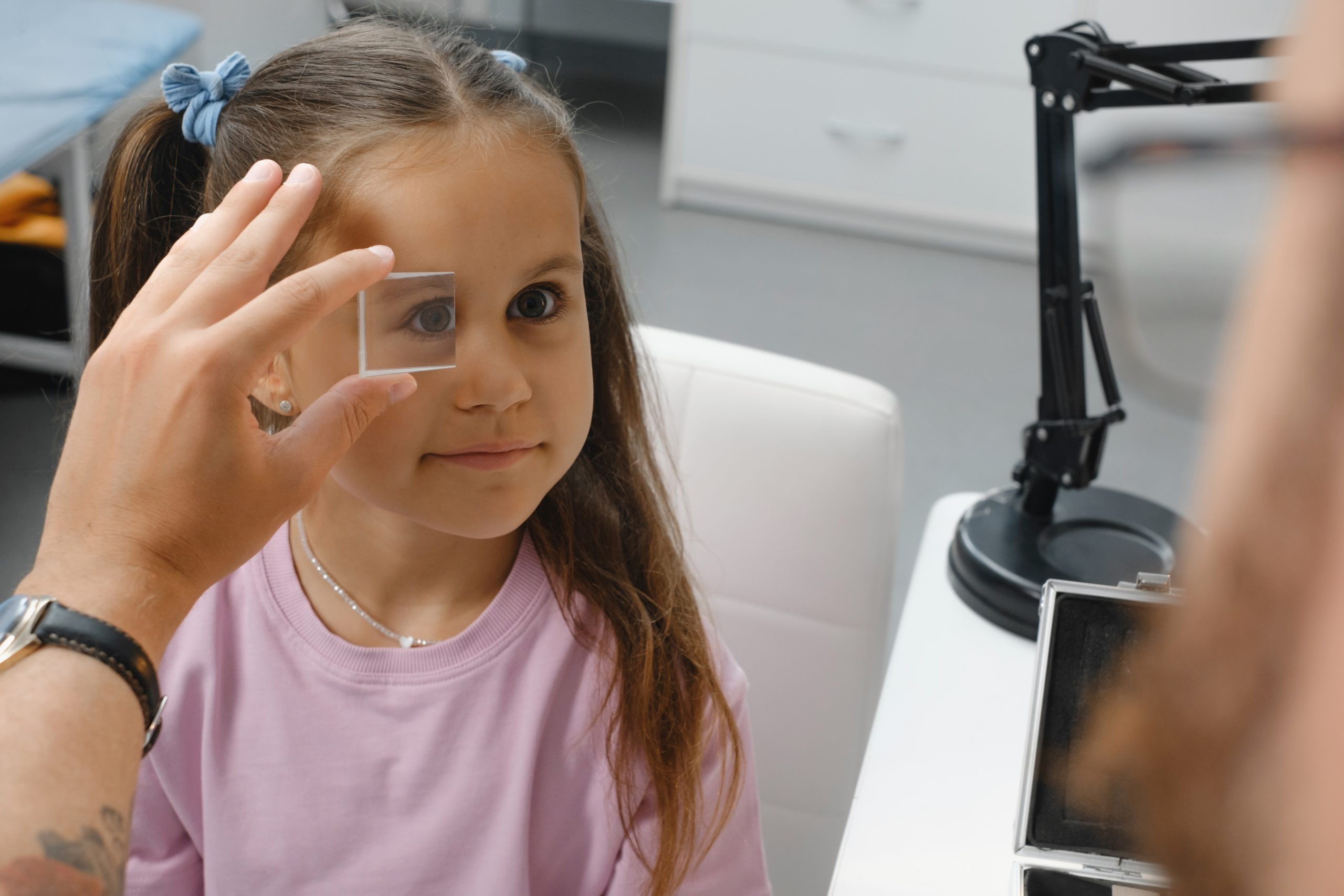
- We’ll be testing how well your eyes move in various directions, also known as ocular motility. We’ll also measure your misalignment by holding special prisms in front of your eyes and testing for eye movement. This is all painless and much simpler than regular refraction exams. We won’t be asking you to choose which of two lenses offers clearer vision.
- We will ask questions about what you see, how you experience the world through your vision, and what you do already to make your vision better in everyday life. We’ll talk with you about your own perception of the problem and any other symptoms or concerns you might have.
- We will talk about your treatment options, including prism lenses that are incorporated into your existing eyeglass prescription or, in some cases, surgical options.
How to make your adult strabismus exam easier and more efficient:
- Please bring all medical insurance cards and your driver’s license or state identification. Please note we do not participate with vision insurance but we do participate with many medical insurance plans.
- Be prepared to share your medical history and medications you’re currently taking. A written list of your physicians, medical conditions and medications is very helpful.
- Please bring this completed new patient registration form to your first visit.
- If you already wear glasses, please bring them with you, as well as contact lenses and the contact lens box with your prescription printed on it.
- If your insurance company requires authorization or referral from your primary care doctor, please access this authorization for your first visit and for every visit thereafter.
- Be prepared to pay for any services not covered by your insurance company using cash, check or credit card (Mastercard, Visa or Discover).
Thank you for being our patient and for trusting your vision to our award-winning eye care team at Children’s Eye Care of Michigan.
SCHEDULE AN APPOINTMENT