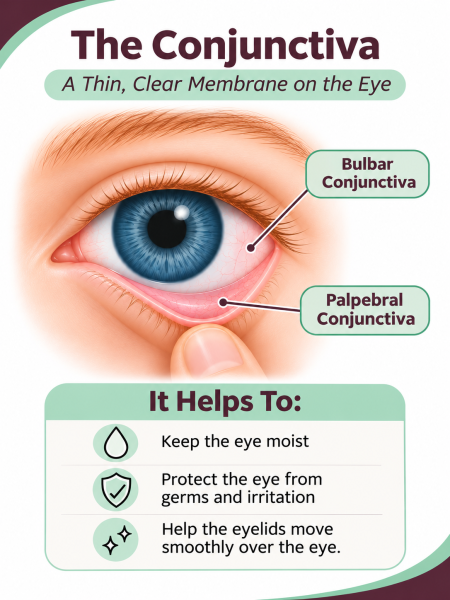
 The conjunctiva is a thin, transparent membrane that covers the white part of the eye and lines the inside of the eyelids. It helps protect the eye and keep its surface moist and comfortable.
When the conjunctiva becomes irritated, inflamed, infected, or develops an unusual growth, parents may notice redness, tearing, discharge, swelling, or a visible spot or bump on their child’s eye.
While many conjunctival conditions are mild, others require specialized evaluation or treatment. At Children’s Eye Care, our pediatric ophthalmologists diagnose and manage a wide range of conjunctival disorders in infants, children, and adolescents.
Common Conjunctival Conditions in Children
Conjunctivitis (Pink Eye)
Conjunctivitis, commonly called pink eye, occurs when the conjunctiva becomes inflamed. Although redness is a common symptom, not every red eye is caused by conjunctivitis. There are several types:
- Viral conjunctivitis: Often occurs with a cold or respiratory infection and causes redness, watering, and irritation. It can spread easily between people.
- Bacterial conjunctivitis: May cause redness, thicker discharge, and eyelids that become crusted or stuck together, particularly after sleeping.
- Allergic conjunctivitis: Typically causes itching, watering, and redness in both eyes. It may occur seasonally or with exposure to allergens such as pollen, dust, or pets.
- Irritant conjunctivitis: Develops when the eye reacts to substances such as smoke, chemicals, or other environmental irritants.
Treatment depends on the cause. Antibiotic eye drops may be appropriate for certain bacterial infections but do not treat viral or allergic conjunctivitis.
Conjunctival Nevus (Eye Freckle)
A conjunctival nevus is a usually benign pigmented spot or growth on the surface of the eye. Often described as an eye freckle, it may appear brown, tan, or occasionally nearly colorless.
These spots commonly become noticeable during childhood and may change somewhat as a child grows. Most conjunctival nevi do not require treatment. However, an ophthalmologist may recommend monitoring with examinations or photographs to document their appearance. Changes in size, shape, color, or surrounding tissue may require further evaluation.
Conjunctival Cysts
A conjunctival cyst is a small, fluid-filled sac that develops on or beneath the conjunctiva. It may appear as a clear or translucent bubble on the white part of the eye.
Cysts can occur spontaneously or develop after irritation, inflammation, injury, or surgery. Many conjunctival cysts are harmless and can simply be monitored. If a cyst becomes large, causes irritation, or interferes with normal eye function, treatment or surgical removal may be considered.
Limbal Dermoids
A limbal dermoid is a benign growth that is typically present at birth. It develops near the limbus, where the clear cornea meets the white part of the eye.
Dermoids may appear as small, raised, whitish or yellowish areas and can contain tissue such as skin, fat, or hair follicles. Some dermoids are primarily cosmetic, while others can change the shape of the cornea, cause astigmatism, or interfere with normal vision development.
Children with limbal dermoids may require monitoring, glasses, amblyopia treatment, or surgical intervention, depending on the size, location, and effect on vision.
Pyogenic Granulomas
A pyogenic granuloma is a benign, rapidly growing area of inflammatory tissue that may develop after eye surgery, injury, or irritation. It often appears as a bright red or pink, raised bump on the conjunctiva and may bleed easily. Despite its name, a pyogenic granuloma is not typically caused by a bacterial infection.
Treatment may include prescription eye medications or surgical removal, depending on its size, location, and response to treatment.
Conjunctival Hemorrhage (Subconjunctival Hemorrhage)
A subconjunctival hemorrhage occurs when a small blood vessel breaks beneath the conjunctiva, producing a bright red patch on the white part of the eye. It may happen after coughing, sneezing, rubbing the eye, or minor trauma. Sometimes no clear cause is identified.
Most uncomplicated subconjunctival hemorrhages resolve without treatment and do not affect vision. However, an ophthalmologist should evaluate cases associated with injury, pain, changes in vision, or repeated episodes.
Other Conjunctival Growths and Abnormalities
Less commonly, children may develop other conjunctival lesions, including vascular abnormalities, unusual pigmented areas, or inflammatory growths.
Most conjunctival growths in children are benign. However, a new or changing lesion should be evaluated to determine whether observation, additional testing, or treatment is appropriate.
How Are Conjunctival Conditions Diagnosed?
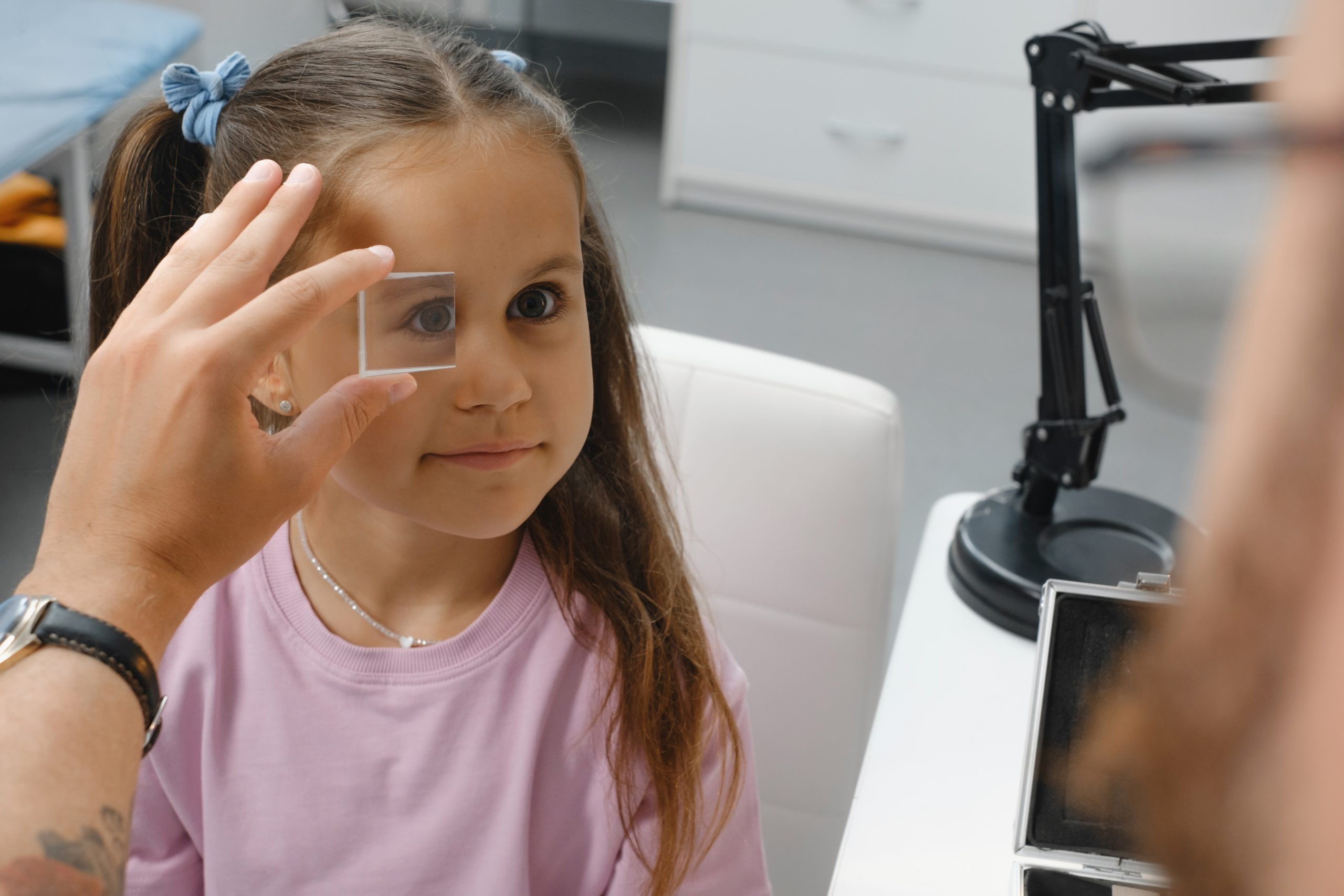
A pediatric ophthalmologist examines the conjunctiva and surrounding eye structures to determine the cause of redness, irritation, discoloration, or an unusual growth. Depending on the child’s symptoms and examination findings, the evaluation may include:
- Examination of the conjunctiva, cornea, and eyelids
- Assessment of vision and visual development
- Magnified examination using a slit lamp or other age-appropriate equipment
- Occasionally, we’ll photograph the conjunctiva to monitor a lesion over time
- Additional testing or biopsy when medically indicated
Many conjunctival conditions can be diagnosed through a comprehensive eye examination without invasive testing.
How Are Conjunctival Conditions Treated?
Treatment depends on the underlying condition and whether it affects comfort, eye health, or vision. Options may include observation, lubricating eye drops, allergy medications, prescription anti-inflammatory or antibiotic treatment, and, when appropriate, surgical removal of a lesion.
For children, treatment decisions also consider the potential effect on normal visual development, including the risk of amblyopia (lazy eye).
When Should Parents Be Concerned?
Parents should seek prompt medical evaluation if their child develops:
- Significant eye pain or sensitivity to light
- Changes in vision
- A new white or cloudy area on the cornea
- Marked swelling or redness, particularly with fever
- A rapidly growing or changing spot on the eye
- Redness or discharge in a newborn
- Eye redness following an injury or chemical exposure
- Not every red eye is pink eye. Some eye conditions can appear similar initially but require very different treatment.
Specialized Pediatric Eye Care in Southeast Michigan
Children’s Eye Care’s pediatric ophthalmologists evaluate and treat conjunctival conditions ranging from common eye infections and allergies to congenital growths and more complex ocular surface abnormalities.
With offices in Detroit, Dearborn, Clinton Township, and West Bloomfield, we provide specialized pediatric ophthalmology care to families throughout Metro Detroit and Southeast Michigan.
Frequently Asked Questions
SCHEDULE AN APPOINTMENT