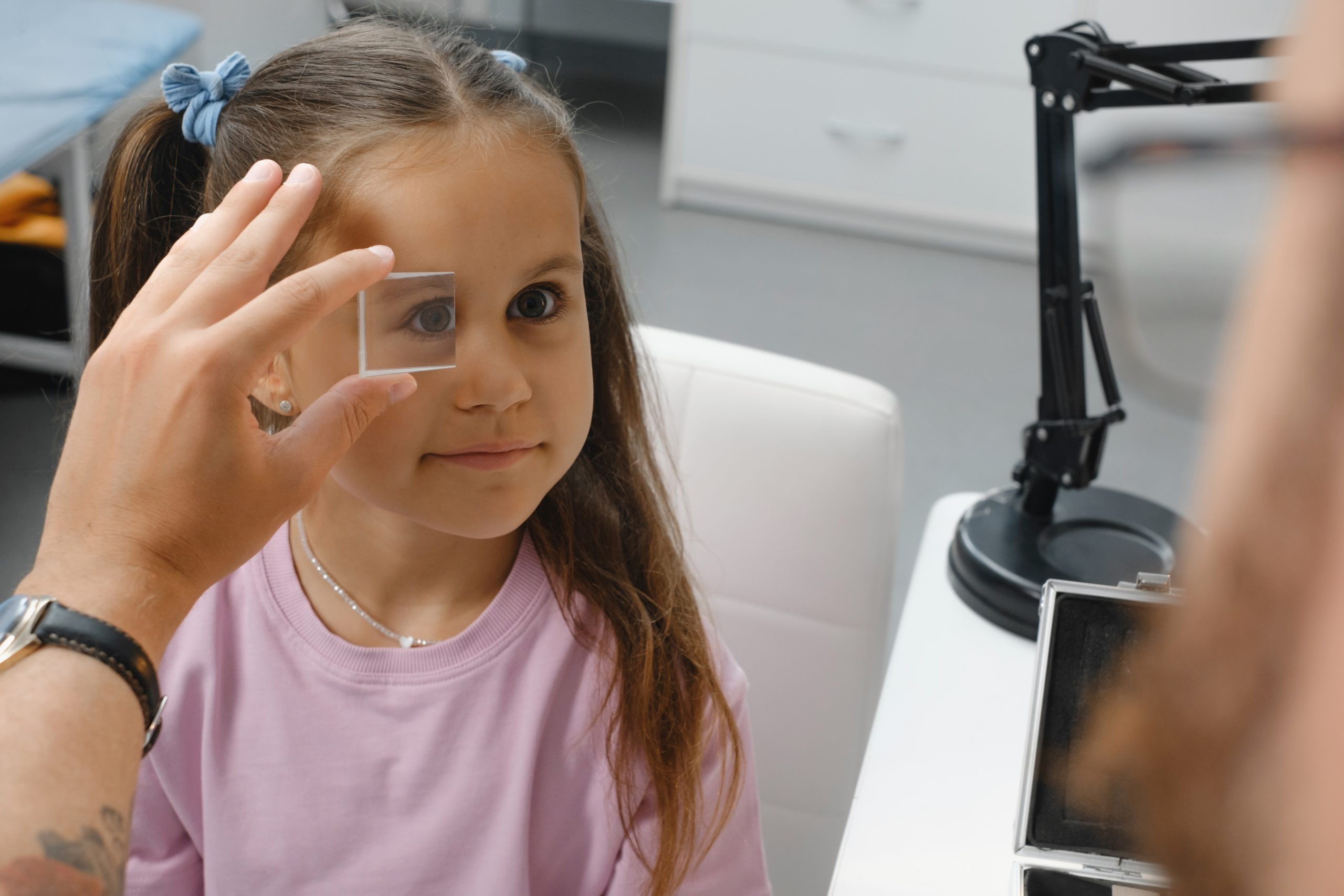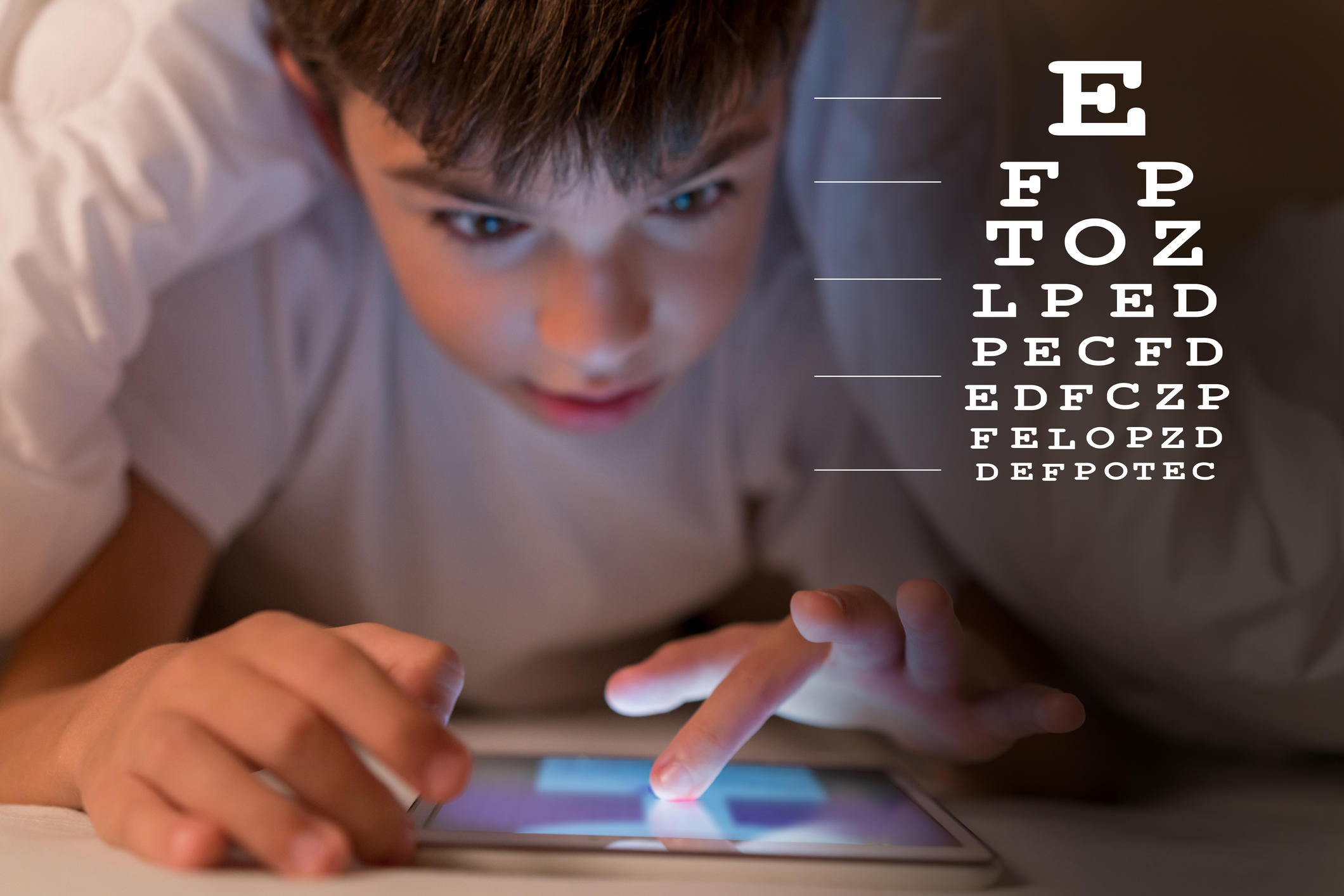
If you child has low vision, it means he or she has partial vision loss that can’t be corrected with glasses, contact lenses or surgery. Conditions that can cause low vision include juvenile cataracts, glaucoma and problems with the retina or optic nerve. To check for low vision, an ophthalmologist or optometrist completes a variety of tests on the child such as visual acuity (how small of an object you can see) and a test to check the child’s peripheral of side vision.
It’s important to know that people with low vision aren’t usually completely blind (no light perception) and can usually complete everyday tasks with some basic interventions. Ways to make life easier for children with low vision include special glasses and using adaptive tools like magnifiers and binoculars. Kids can also benefit from books with larger text, closed-circuit television or the use of tablets.
Because of the effect on academics, many children with low vision receive special education support from their local school district. The school’s vision specialist will assist with many lifestyle considerations based on an assessment of the child’s visual capability in each area of her/his visual field.
Understanding Low Vision
The World Health Organization has defined the variations of visual impairment using the Snellen eye chart for visual acuity testing and loss of visual field.
- Moderate Visual Impairment = 20/70 – 20/160
- Severe Visual Impairment = 20/200 – 20/400 or visual field of 20 degrees of less
- Profound Visual Impairment = 20/500 – 20-1000 or visual field of 10 degrees of less
Find more details about Snellen testing at medlineplus.gov/ency/article/003396.htm
Low Vision Resources for Children & Families
Children with low vision or visual impairments may benefit from specialized educational services, low vision devices, developmental support, and recreational opportunities.
Finding these resources can sometimes be challenging. We’ve gathered organizations, programs, and services available to families throughout Metro Detroit, Southeast Michigan, and beyond.
Getting Started: School & Early Intervention Services
Children with visual impairments may qualify for specialized educational services, even when they have no other disabilities. Under the Individuals with Disabilities Education Act (IDEA), eligible children are entitled to a free appropriate public education, including services and accommodations based on their individual needs.
Where should parents start?
Contact your local school district’s special education department and request an evaluation for vision-related services. For infants and toddlers, contact Early On Michigan to explore early intervention services. Depending on eligibility and individual needs, services may include:
- Teachers of students with visual impairments
- Orientation and mobility instruction
- Classroom accommodations and accessible learning materials
- Assistive technology
- Individualized Education Programs (IEPs)
Early on Michigan: Young children from birth to age 3 are served by Early On Michigan for early intervention services for developmental delays or disabilities. Services address the child’s social, health and educational needs. Parents can contact the agency anytime to start the process for an evaluation. 240 S. Bridge St, Suite 250, DeWitt, 1-800-327-5966, 1800earlyon.org
Michigan Alliance for Families: A statewide resource that connects families of children with disabilities to resources to help improve their children’s education. 1325 S. Washington Ave., Lansing, 800-552-4821, michiganallianceforfamilies.org
Michigan School District & Vision Services
Michigan’s Intermediate School Districts (ISDs) and Regional Educational Service Agencies (RESAs) help coordinate specialized educational services for students with disabilities, including visual impairments. Find Your Intermediate School District:
- Genesee County: Genesee Intermediate School District — 810-591-4400
- Lapeer County: Lapeer Intermediate School District — 810-664-5917
- Livingston County: Livingston Educational Service Agency — 517-546-5550
- Macomb County: Macomb Intermediate School District — 586-228-3300
- Monroe County: Monroe Intermediate School District — 734-242-5799
- Oakland County: Oakland Schools — 248-209-2000
- St. Clair County: St. Clair County RESA — 810-364-8990
- Washtenaw County: Washtenaw Intermediate School District — 734-994-8100
- Wayne County: Wayne RESA — 734-334-1300
Professionals Who Support Students With Visual Impairments
School-based vision professionals may include:
- Teachers of Students With Visual Impairments (TVIs): Educators who provide specialized instruction, accessible learning strategies, and classroom accommodations.
- Orientation & Mobility Specialists (O&M): Professionals who teach children with visual impairments how to navigate their surroundings safely and independently.
Families should begin by contacting their local school district’s special education department.
Regional Vision Services Contacts
The following contacts were included in our existing resource directory:
Detroit Public Schools / Wayne County
Serving Detroit, Highland Park, and Harper Woods.
Marisa Lazich — New Student Intake & Youth Low Vision Supervisor
Phone: 313-263-2896
Western Wayne County
Serving western Wayne County school districts.
Pam Maraone
Phone: 734-367-3856
Email: pmaraone@livoniapublicschools.org
Lincoln Park Public Schools / Downriver
Serving Dearborn and many Downriver communities.
Deb Polisuk
Phone: 313-389-0210
Email: deborah.polisuk@lpps.info
Macomb Intermediate School District
Grace Haden
Phone: 586-412-2601
Oakland County
Contact your local school district and request a vision services evaluation.
Individual staff contacts should be confirmed before publication, as assignments and personnel may change.
Michigan Department of Education – Low Incidence Outreach
Low Incidence Outreach provides educational materials and support for students with visual impairments, their families, and school personnel.
Phone: 517-373-2887
Toll-free: 888-760-2206
Low Vision Specialists & Assistive Devices
Youth Low Vision Program
Michigan’s Youth Low Vision Program helps eligible school-age children make the most of their functional vision. The program brings together families, school-based vision professionals, and low vision specialists to evaluate a child’s needs and recommend appropriate supports. These may include magnifiers, specialized glasses, assistive technology, and other low vision devices.
Why Are Both a Pediatric Ophthalmologist and a Low Vision Specialist Important?
Your child’s pediatric ophthalmologist monitors eye health, diagnoses and treats medical conditions, and evaluates changes in vision. A low vision specialist focuses on helping children use their remaining vision as effectively as possible for reading, learning, daily activities, and independence. These services complement one another.
Metro Detroit Low Vision Providers
The following specialists were included in our existing directory. Families should confirm current availability, age requirements, and referral policies.
Elizabeth M. Becker, OD
Walton and Becker Eyecare — Oxford | P: 248-628-3441 | Website
Susan R. Gormezano, OD, FAAO
Low Vision Associates — Southfield | P: 248-827-3670 | Website
Susan Hahn, OD
Corewell’s Beaumont Eye Institute — Royal Oak | P: 248-551-2020 | Website
Carol Marston-Foucher, OD, FAAO
Marston Optometry — Livonia | P: 734-421-5454 | Website
Lylas G. Mogk, MD & Ramanpal Deol, OD, FAAO
Henry Ford Health — Grosse Pointe Park | P: 313-824-2401 | Website
Family Support & Community Organizations
Greater Detroit Agency for the Blind & Visually Impaired: Provides services and resources for individuals who are blind or visually impaired, including daily living skills, technology training, orientation and mobility, support groups, and opportunities for social connection. Life Beyond Sight
Family Connect: Offers information, personal stories, educational resources, and family support for parents raising children who are blind or visually impaired.
Little Bear Sees: Provides education and resources for families of children with cerebral/cortical visual impairment (CVI), including support groups, books, courses, and additional learning materials.
Penrickton Center: Located in Taylor, Michigan. Provides specialized developmental programming and support for children who are blind or visually impaired and have additional disabilities. Programs are designed around children’s individual developmental needs.
CAMPS & RECREATIONAL PROGRAMS
Program availability, eligibility, ages served, and registration dates may vary. Families should contact each organization directly for current information.
Enrichment Programs & Activities
Children with visual impairments can participate in music, art, recreation, and other activities that encourage creativity, confidence, independence, and social connections.
Vision Through Music® – Helping Children Discover Music
Children’s Eye Care is proud to support Vision Through Music®, a national initiative of the Children’s Eye Foundation of AAPOS in partnership with the Academy of Music for the Blind.
The program helps children who are blind or visually impaired explore music through accessible instruction. It also provides resources and training for music educators interested in teaching students with visual impairments.
Lisa Bohra, MD, one of our pediatric ophthalmologists and a passionate advocate for music education, is especially enthusiastic about expanding musical opportunities for children with vision challenges.
SCHEDULE AN APPOINTMENT